A Manager’s Guide to Supporting Mental Health at Work
This is a guide of how managers can support mental health at work more effectively. Line managers sit on the front line of workplace attendance. They are usually the first to notice changes in behaviour, performance, or attendance patterns. However, without structured guidance, many managers avoid discussing mental health out of fear of saying the wrong thing or worsening the situation.
If you are looking for practical ways on how to support employee mental health at work, establishing clear manager workflows is essential. Read on to find out more about how to support mental health at work.
Spotting the Early Signs of Mental Health
Mental health challenges rarely appear overnight. In most cases, subtle indicators precede an absence episode:
- Changes in Work Patterns: Uncharacteristic lateness, erratic break times, or working late without increased output.
- Behavioral Shifts: Increased irritability, withdrawal from team discussions, or unusual quietness.
- Performance Drift: Difficulty concentrating, frequent small mistakes, or missed deadlines.
- Physical Indicators: Persistent fatigue, frequent minor illnesses (such as headaches or stomach upsets), or noticeable changes in appearance.
Conducting an Effective Early-Intervention Conversation for Support
When a manager notices changes, waiting for a formal review or a sick note is a missed opportunity. Early conversations should be supportive, private, and non-judgmental:
- Choose the Right Setting: Hold the conversation in a private space where you will not be interrupted.
- Focus on Observations, Not Diagnoses: Frame the discussion around observable changes (e.g., “I’ve noticed you’ve seemed under pressure lately and wanted to check in” rather than “Are you stressed?”).
- Listen Without Immediate Problem-Solving: Allow the employee time to speak without interrupting or offering quick fixes.
- Agree on Practical Adjustments: Discuss temporary, reasonable modifications to workload, shift patterns, or duties that might ease immediate pressure.
Managing the Return-to-Work Process to Best Support Mental Health at Work
How an employee is welcomed back after a period of mental health absence strongly influences whether the return is successful or results in a relapse. A structured return-to-work process should include:
- A brief, welcoming meeting on their first day back to reassure them and review duties.
- Phased return arrangements where appropriate (e.g., part-time hours building up over 2 to 4 weeks).
- Regular informal check-ins during the first month to monitor workload and stress levels.
How CWS Workplace Toolkits Transforms Mental Health Absence
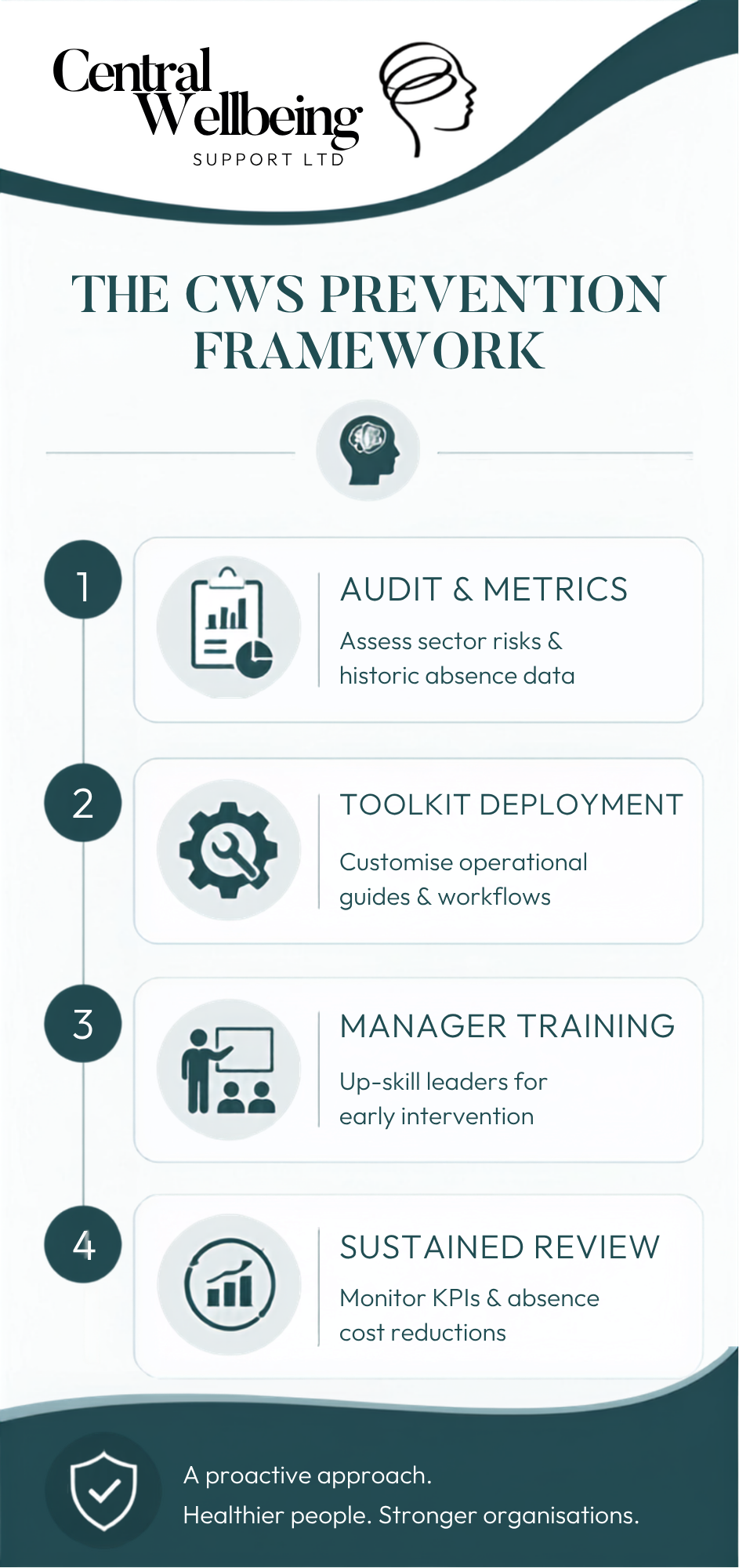
At Central Wellbeing Services (CWS), we work alongside HR leaders and business owners/ managers across the East Midlands to implement structured, practical frameworks that lower sickness rates and build organisational resilience.
Unlike generic helpline services, our toolkits integrate directly into your day-to-day operations.
Sector-Specific Customisation for Supporting Mental Health at Work
We understand that an engineering firm in Derby faces entirely different workforce dynamics than an early-years setting in Nottingham. Our toolkits are tailored to your industry’s specific operational realities:
- For Early-Years & Care Settings: Focus on emotional resilience, rotas designed to prevent burnout, and peer support structures. We have hands-on experience working with a local nursery in Stapleford called Jellybeans Childcare, so it’s safe to say we know the same well.
- For Manufacturing & Logistics: Focus on shift pattern adjustment, physical-mental health integration, and accessible support for non-desk-based teams.
Empowering Managers with Actionable Tools
Our approach focuses on upskilling your leadership team. Engaging a specialist equips line managers with practical templates, risk assessment guides, and conversation frameworks, enabling them to manage mental health proactively rather than relying on external helplines.
Steps to Reduce Mental Health Absence
If your organisation is experiencing high sickness absence costs, implementing a structured strategy will yield clear operational improvements.
- Audit Your Absence Data: Look beyond overall absence days. Identify recurring patterns across departments, shift times, and job roles to understand root causes.
- Review Existing EAP Usage: Evaluate the ROI of your current support systems. Check real utilisation rates and determine if your EAP actively prevents sick leave or merely responds to crises.
- Train Your Line Managers: Invest in practical, hands-on training that gives supervisors the confidence to identify stress early and manage sensitive discussions effectively.
- Implement Clear Adjustments Frameworks: Establish transparent policies for temporary work adjustments so managers can act quickly when an employee shows signs of struggle.
- Partner with Workplace Specialists: Work with experienced consultants to build bespoke toolkits aligned with your operational goals and industry demands.
Transform Absence Management in Your Workplace
Unmanaged mental health absence places an unnecessary burden on your teams and financial performance. Moving away from passive, generic EAPs toward targeted workplace toolkits allows you to protect your employees’ wellbeing while safeguarding your business operations.
Whether you operate in early-years education, manufacturing, or professional services across the East Midlands, Central Wellbeing Services (CWS) can help you build a resilient, productive workforce.
Take the first step toward reducing staff absence mental health and contact us today to discuss your organization’s specific challenges or to book an initial workplace consultation with our specialist team.
